•8 min read
Base64 Encoding and Decoding: Complete Developer Guide
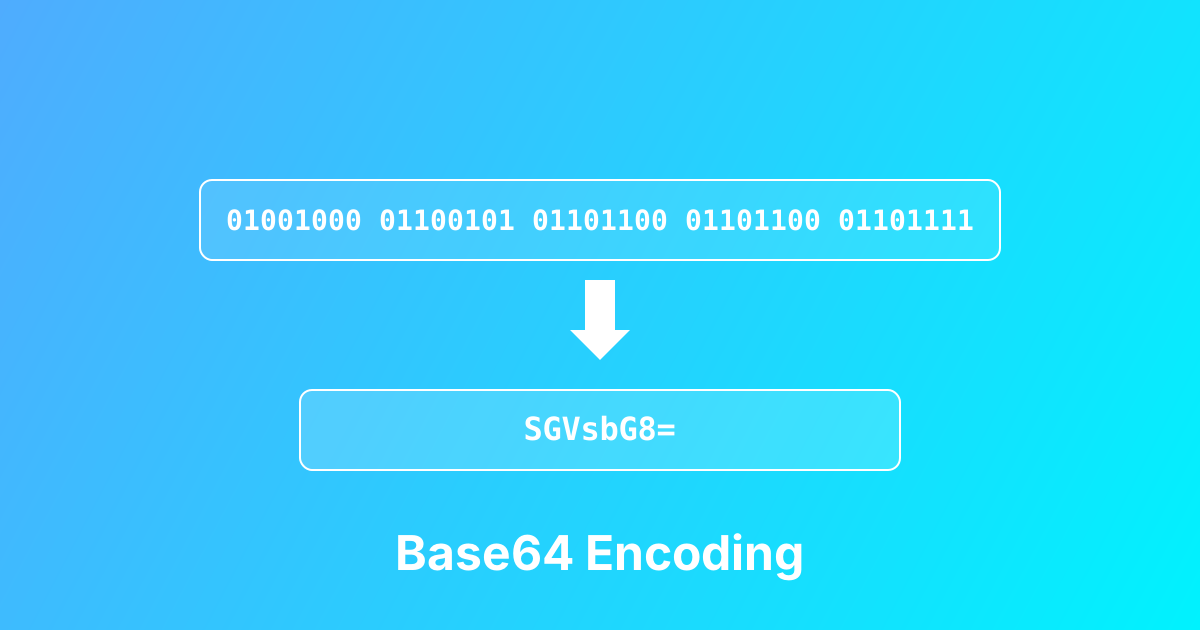
Master Base64 encoding and decoding with practical examples. Learn when to use it, common pitfalls, and best practices for handling binary data.
Convert files to Base64 data URLs for HTML, CSS, JSON, and APIs — locally in your browser
Drag & drop your file here
or
Supported formats: All file types supported
Maximum file size: 10MB
This File to Base64 Converter turns any file (images, icons, documents, and more) into a Base64 data URL you can paste directly into HTML, CSS, or JSON. Base64 encoding converts binary bytes into text so you can embed files inline without hosting them separately. The output includes the correct MIME type prefix (for example, data:image/png;base64,...) so it works immediately in <img src>, CSS background-image, email templates, and API payloads.
Upload a file (PNG, JPG, GIF, WebP, SVG, PDF, etc.)
The tool generates a Base64 data URL automatically
Copy the Base64 output
Paste it into HTML, CSS, JSON, or an API request
Optional: Use it as <img src='data:...'> or CSS background-image: url('data:...')
Embed images in HTML: Use Base64 in <img src='data:...'> without a hosted file
Inline icons in CSS: Add Base64 images to background-image for small assets
Email templates: Inline images when external assets might be blocked
API payloads: Send file data inside JSON when required by a service
Offline/PWA assets: Embed small resources to reduce dependency on network requests
Rapid prototyping: Share self-contained HTML snippets that include images
Outputs a valid Base64 data URL with the correct MIME type
Supports common image formats (PNG, JPG, GIF, WebP, SVG) and other files
Fast conversion in your browser (no upload to a server)
One-click copy to clipboard
Great for HTML, CSS, JSON, Markdown, and API debugging
your file stays on your device
Learn more about this tool with our in-depth guides
Master Base64 encoding and decoding with practical examples. Learn when to use it, common pitfalls, and best practices for handling binary data.