•8 min read
Base64 Encoding and Decoding: Complete Developer Guide
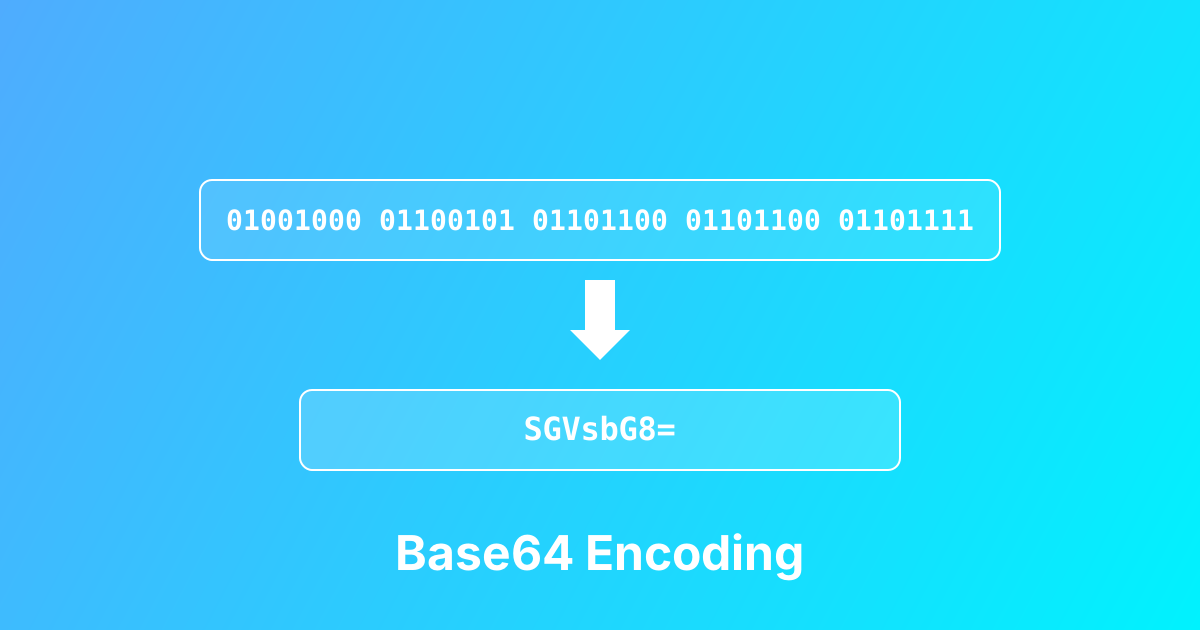
Master Base64 encoding and decoding with practical examples. Learn when to use it, common pitfalls, and best practices for handling binary data.
Encode text to Base64 instantly (UTF-8). Create Base64 strings for APIs, configs, Basic Auth, and safe text transport — locally in your browser.
Base64 Encode converts text into Base64 (a text-safe representation of binary data). It’s commonly used when you need to pass data through systems that expect plain text only—like HTTP headers, JSON payloads, query parameters, environment variables, email bodies, or configuration files. This tool encodes using UTF-8 by default, so Unicode characters (emoji, Hebrew/Arabic, accented letters) are preserved correctly. It’s ideal for developer workflows: quickly create Base64 strings for Basic Auth, embed small assets as data, or debug encoded payloads. Everything runs locally in your browser—no uploads and no server processing.
Paste or type the text you want to encode (plain text, JSON, XML, etc.)
The tool encodes automatically to Base64 using UTF-8
Copy the Base64 output for use in headers, configs, or API payloads
If you need URL-safe output, use the Base64URL tool (or enable URL-safe mode if available)
If another system expects padding, keep '=' padding enabled (default)
Create HTTP Basic Auth credentials (base64(username:password))
Encode JSON snippets or config values for environment variables
Send binary-ish data through text-only channels (headers, JSON, logs)
Generate Base64 for small data URIs or inline payloads in demos
Debug API requests/responses that include Base64 fields
Safely transport Unicode text through systems that mishandle non-ASCII
Prepare test fixtures for unit tests that require Base64 inputs
Preserves Unicode characters correctly
Compatible with most APIs and libraries
Keeps '=' padding for strict decoders (default)
Runs in your browser (no uploads)
Great for headers, env vars, and payloads
Helps switch between encode/decode flows quickly
Common developer scenarios included
Learn more about this tool with our in-depth guides
Master Base64 encoding and decoding with practical examples. Learn when to use it, common pitfalls, and best practices for handling binary data.